
Many of your devices draw more power when they start up than they do when they’ve been running for a while. It’s an added strain on your generator and the devices themselves that can leave you with burned-out tools and appliances if you don’t plan for it.
Running Watts vs. Starting Watts: The Number That Catches People Off Guard
Every motor-driven appliance such as refrigerators, well pumps, sump pumps, and air conditioners consumes a power surge when it starts up. This surge can be two to three times the wattage the appliance needs to run. And it lasts only a second or two. If your generator cannot supply your appliance’s starting wattage, the motor will struggle, the voltage will drop, and the generator and the motor could be damaged.
Do a full wattage audit before you buy anything. Write down every appliance you would need to run during an outage, obtain the running watts on the appliance’s nameplate or in the owner’s manual, then get the starting watts. Sum up the running watts for everything you would run at the same time. Then just place the single highest starting wattage on top. Because only one appliance is starting at any given time, the generator must absorb that spike.
That combined total is your actual minimum. It’s not the running total by itself.
Standby vs. Portable: The Real Trade-Offs
Whole-home standby generators are fixed in place, powered by natural gas or propane, and turn on automatically within seconds after an outage. They’re the ultimate hands-free option, but they’re generally five to ten times more expensive upfront, require professional installation anticipating local code compliance, and ongoing service costs, and they can’t come with you when you move. If you lose power a few times each year and your portable generator operation gets old fast, they’re justifiable.
Read More: How to Modernize Multi-Level Living Spaces for Long-Term Comfort
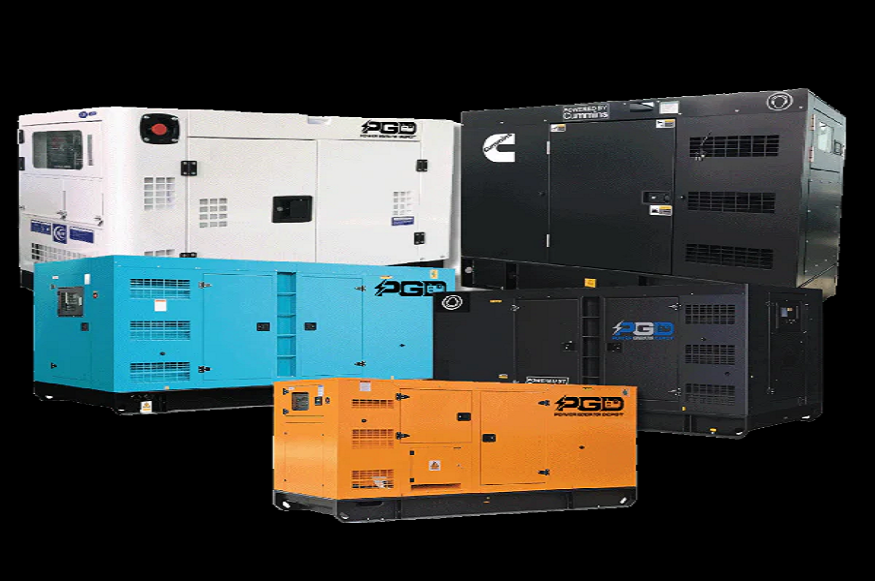
Portable generators aren’t just for out in the bush; they’re a cost-effective choice for backup power and can meet 90% of your needs a few times a year when the grid goes down. They’re also handy if you need to power tools at a construction site or tailgate at the big game. Storage, maintenance, and operation are the primary downside to these light, versatile units, which can be wheeled out of the shed and started up in minutes. Buying a model that runs on both gasoline and propane gives you options when one fuel is scarce. If you’re comparing specific models and wattage classes, Power Generator Depot is a useful resource for filtering by output range, fuel type, and whether you need inverter-grade power quality for sensitive electronics.
The 20% Buffer Rule and Why it Protects Your Equipment
Once you know your estimated minimum, don’t shop for a generator that only barely exceeds it. Running a generator at or near its full rated wattage for a sustained period causes it to run hotter and consume more fuel per kilowatt-hour, stressing engine components and shortening the unit’s life.
For these reasons, most generator experts recommend sizing up and buying a unit that produces about 20 percent more power than your calculations indicate that you need. If your preliminary audit suggests you’ll need about 5,000 watts, for example, you should probably be shopping for a 6,000-watt unit. The extra headroom keeps the engine comfortably far from its full power output and lets you absorb the overages you will almost certainly make on your first estimate.
According to Consumer Reports, a mid-sized portable model in the 5,000- to 8,500-watt range can handle the combined load of a refrigerator, well pump, space heater, and a few lighting circuits running simultaneously. That should cover most common life-safety needs in a power failure without requiring a much more expensive whole-home standby system.
Prioritizing Loads Before You Buy
All outages are not created equal and all homes do not have the same level of need/urgency. Medical equipment at home is not the same as worry about food spoilage. Life-safety loads first, always: medical devices, sump pumps (especially in flood-prone areas), refrigeration, any well or pressure pump.
Read More: How to Transition Your Child’s Bedroom from Toddler to Teen
After that, it’s comfort loads: lighting, a window unit, phone charging. If you’ve only got the budget or the space for a smaller genny, load shedding, deciding which circuits you want to have powered at any given time, is a perfectly viable strategy. You do not have to run everything at once.
This is also where a transfer switch goes from “highly recommended” to “non-negotiable.” A properly installed, to-NEC-standards transfer switch connects your genny to your panel safely and prevents you from back feeding the grid and possibly killing a utility lineman during a black start. Running a rat’s nest of extension cords is a reasonable short-term work around, but it is not a permanent or safe installation.
A Note on HVAC and Inverter Generators
Central air conditioning tends to be the problem child in sizing. Compressors have high starting surges, and a standard portable generator won’t even consider handling a central AC unit without a soft-start kit. That’s basically a mini-cap unit installed directly on the compressor to reduce that initial power spike. Without a soft-start kit, you’re often looking at a 15,000+ watt standby unit to run central AC reliably.
Inverter generators should be mentioned in the sizing conversation for different reasons. They produce cleaner power (read: lower Total Harmonic Distortion), which matters if you’re running a laptop, phone, or any appliance with modern electronics. For those running sensitive equipment, an inverter generator is easily worth the price bump over a conventional portable.
Getting the size right means running the math first, applying the buffer, and being honest about what you actually need to keep running. The goal isn’t the biggest generator, it’s the one that fits your loads, your fuel situation, and your budget without leaving you short when it counts.




Leave a Reply
You must be logged in to post a comment.