
On paper, multi-level homes seem to be the perfect solution for families who need more space. They offer different living zones, privacy and noise isolation, and they look more interesting architecturally. However, not enough thought is given to how people actually live and age in those spaces when those homes are designed. How often have you heard someone say they installed an elevator or a stair lift to their home because the kids moved out? That’s definitely not a sustainable and practical solution.
Functional flow before aesthetics
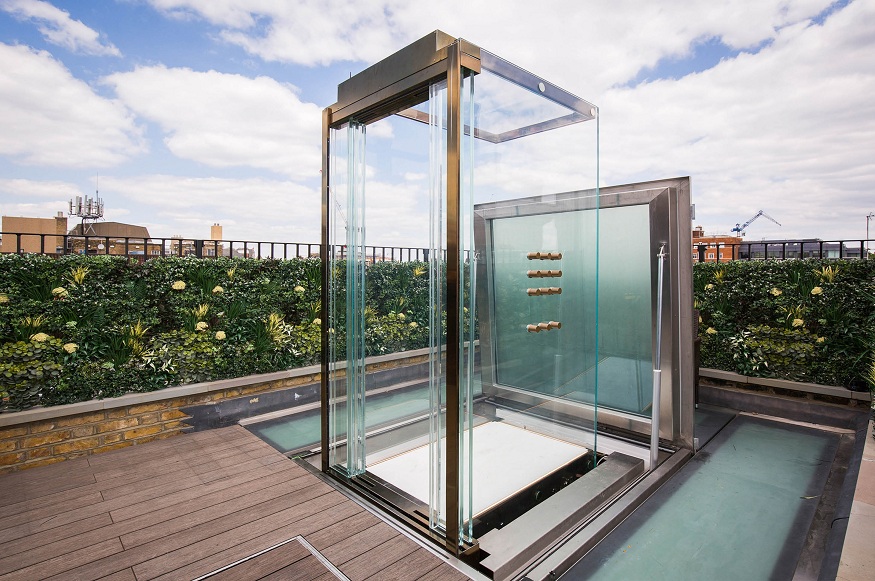
The first question you should ask about any multi-level renovation isn’t “what does it look like?” It’s “how does it work?” Vertical circulation – that’s the way people move between floors – will shape the daily experience of a home more than almost any other factor. Wide hallways, shallow stair risers, and door frames with real clearance aren’t clinical features. They’re the difference between a house that ages with you and one that starts working against you. Universal design principles don’t mandate a medical aesthetic. They mandate that spaces function well for a wider range of people across a longer stretch of time. That’s just good design. When it comes to retrofitting an existing layout, stair replacement or redesign is often the highest-leverage change that is available. A staircase taking up a compact, steep footprint can be envisioned as a wider, more gradual run – or replaced with a mechanical solution that handles vertical movement without dominating the floor plan. Luxury platform lifts have moved light years beyond the clinical stairlift aesthetic of previous decades. When properly specified, they integrate into period properties and contemporary interiors alike. Finishes that match rather than interrupt the surrounding space.
Ground floor flexibility as a long-term asset
An approach to multi-level homes that is often overlooked, is to design ground-floor rooms with the ability to convert to a primary bedroom if needed. This could even include the addition of an ensuite while maintaining continuity with the rest of the house in terms of fittings and finishes. The fundamental requirements are physical access, a nearby full bathroom, suitable privacy and clearance for equipment/conversion, and potentially increased space.
Read More: How to Transition Your Child’s Bedroom from Toddler to Teen
This could be a child’s bedroom, a study, or an informal living space. It could also be a games room re-branded as a grandparent’s flat, or a partially understair void adjusted to become a lift lobby. Maybe it can become a new use for the space under that multipurpose staircase you’re about to build.
Lighting as a safety and comfort layer
Staircases and hallways are generally the first places in your home where age begins to show. Bad lighting can also make these areas dangerous at night, create the feeling of cramped quarters, and strip away the cozy atmosphere that might otherwise be prevalent in the rest of your house.
Lighting that automatically turns on (motion-activated, for instance) can add an extra layer of safety in both hallways and on stairs late at night, while additional ambient lighting in hallways will give them a different feel after the sun goes down.
The notion is to make every room in your home work all day long, not just when the conditions are perfect. That’s a great rule for whatever upgrade you decide to make in your home.
Temperature and smart systems across levels
Heat naturally rises. While that’s a basic scientific principle, it poses a significant comfort challenge in multi-story dwellings, one that’s rarely directly confronted by most renovations. Downstairs sits frigid during the winter, while upstairs turns into a sauna – two different thermal conditions sharing the same roofbeam.
Thermal zoning provides the answer, but only in concert with adequate insulation around the entire building envelope. Installing smart thermostats in a house with paper-thin party walls or single-glazed stairwell windows won’t achieve the necessary outcome. The insulation investment must come first.
Read More: Creating Comfortable Outdoor Spaces on Any Budget
Smart-home additions (lights, locks, thermostats) offers a level of convenience that should appeal to any occupant, regardless of their ability to jump from floor to floor. The same system that lets occupants tweak room temperature from a mobile phone can also tie into lift controls, entry access, and monitoring security feeds. This isn’t a novelty feature you use to impress guests, it’s how a well-designed home is already supposed to work.
Biophilic elements in vertical spaces
Staircases and landings often feel dead as they are just spaces you cross, do not get natural light, and tend to accumulate items. However, by integrating narrow skylights or light wells above a staircase, the entire experience of that specific area changes and in turn, the perception of the entire house changes.
Vertical greenery for instance, a planter wall on a landing, or climbing plants near a stair window that faces a garden, offers connection to nature even in closed indoor spaces. You pass through these spaces dozens of times a day, so getting them right has a bigger impact on how the house feels than most people expect.




Leave a Reply
You must be logged in to post a comment.