
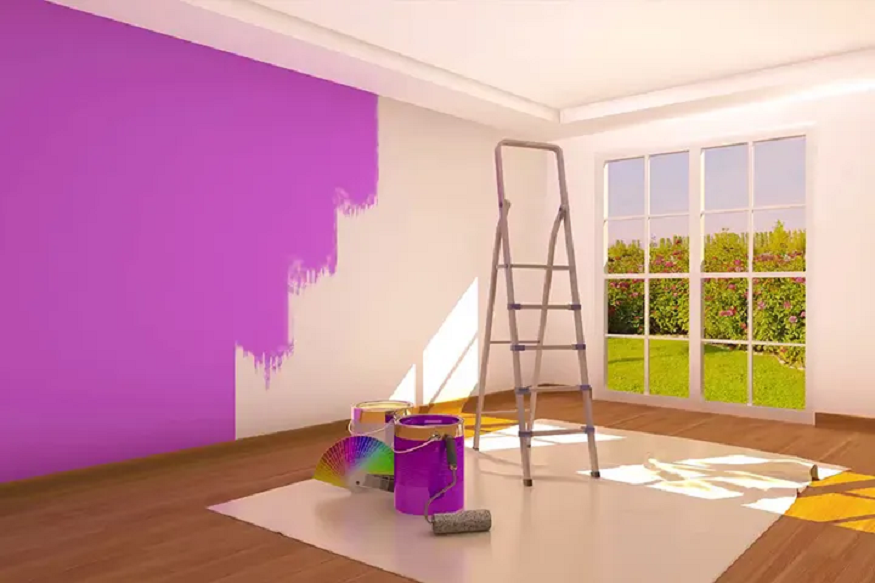
Most DIY paint jobs are not unsuccessful due to the paint itself, but due to the steps overlooked or skipped before applying the paint. The real question to ask yourself before deciding between doing-it-yourself or hiring someone is: Are you okay with taking on the prep work that may not be so fun but will ensure your paint job looks good for 5 years rather than 15 months.
This should not discourage you from DIY projects, as many of them are perfect to be done by you. But, when the cost risk, and expertise seem to be pointing in the same direction, it’s good to know where you should draw the line before committing yourself to a project.
When hiring stops being a luxury and starts being the sensible call
Sometimes there is a point at which DIY doesn’t seem sensible. Not because you’re “not handy enough” – but because the wide range of factors weigh against you at once. Scale, condition, and risk. Add those up, and you’re better off leaving the paint gear in the shed.
If you’re looking at a full exterior, a multi-storey home, or interior walls in genuinely poor condition, the prep work alone will kill a whole weekend before you’ve opened a single tin of topcoat. Tack on height, awkward access, or a looming deadline, and it’s not comparable. For jobs like these, the vast majority of Perth homeowners look into Residential Painting Services Perth WA rather than absorbing the learning curve, equipment cost, and physical danger themselves.
Lead paint deserves its own mention here. Homes built before the 1970s may have lead-based paint under later layers, and scraping or sanding those without proper containment doesn’t just risk a bad finish – it risks contaminating the property and exposing the household to lead dust. This is one of the clearest points where DIY simply shouldn’t happen. Safe testing and abatement need specialist handling, full stop.
Consider the surface, not the paint
The most important factor in determining how a paint job will wear is surface preparation. Scrubbing down walls, scraping away loose paint, sanding any glossy and powdery surfaces, filling holes and cracks – this is what the majority of a professional quote’s labor cost covers. It’s also the step that most homeowners are tempted to skimp on.
Read More: The 9 most important traditional Indian art forms to know
Guess what? Skip or skimp on surface prep and you’ll enjoy such classic failure patterns as peeling paint the next spring, bubbles in the paint as moisture tries to escape from under the film, and “flashing.” Flashing is that unwanted, shiny patina that shows up weeks after your new paint has dried because the surface wasn’t absorbent enough and the top coat film is dying flat in some areas and dull in others. None of these ugly things are the fault of the paint – it’s the surface preparation, stupid. And it’s all masked the day you paint. It’s not until some months (sometimes even in the form of a couple of years) later that the truth rears its ugly head. That’s why so many first-time do-it-yourselfers think they did everything right. until it’s too late!
Price the real cost of doing it yourself
It’s rare that the paint itself is the part of a DIY budget that blows out. It’s all the stuff around the paint. Brushes, rollers, extension poles, good-tack tape, drop sheets, possibly ladders or scaffolding if it’s anything above single storey, caulk, filler, sandpaper, coatings (primer/sealer), and if you’re doing a big wall area, maybe even a spray rental.
And then there are the litres per square metre. People demand an exact minimum cost for a professional paint job, but that’s hard, because it changes so much depending on how many windows and doors, how high the ceilings are, the condition of the walls and the range of colours. For the same reason, it’s the easiest thing in the world to underestimate the quantity of paint you need to buy when you’re doing it yourself. Caution moves a lot of tins.
On a zippy DIY job, that all adds up to the total cost of the paint multiplying by 3 or 4. On a ‘take the week off and do some painting’ DIY job, you’ll be lucky if the total cost of the paint even doubles.
Time is the factor everyone gets wrong
A professional crew can finish painting a three-bedroom interior in three days. For a first-time DIYer, it’s three full weekends, once you factor in cutting in, first coat, drying time, second coat, and cleanup. None of this is meant as a slight against the homeowner. It just takes longer when you’re also learning the work as you go.
Now, multiply this by how much you’re paid professionally per hour and all the “we saved money by doing it ourselves” stories begin to unravel. Yes, you likely spent less on paint and materials, but factoring in three weekends of your own labor isn’t cheaper.
The skill gap is real, and it shows in daylight
The ability to paint a perfectly straight line where wall meets ceiling, achieve a uniform roller stipple over a wide area, and eliminate lap lines where one portion of the room dries before you can blend in the next – these are all things that can require several hundred hours of practice before you get really good at them. They are also the things that become evident when you have raking daylight. Which is when most people notice them.
This is why your average paint job can look good at the time, but still seem like a bit of an amateur hour job once the sun penetrates the wall at dusk. It’s not a talent issue, it’s just a matter of repetition, and most homeowners haven’t done enough square meters yet to have spent the time building that muscle memory.
Match the system to the surface and the climate
Not all walls are created equal. Raw timber needs a sealer before topcoat or the timber will bleed through and absorb unevenly. New plaster needs a mist coat to control suction, or you’ll get patchy sheen once it’s fully cured. Mix up primer and sealer and you’ll get adhesion failures – paint that looks fine for a few months and then lifts off in sheets.
Outside surfaces up the ante again. Perth’s summer heat and UV load is punishing on normal interior grade paint pushed outdoors, and the working window for applying paint in acceptable temperature and humidity is shorter than most assume. Paint that goes on too hot flashes and dries before it levels properly; paint that goes on in the wrong conditions can fail to cure correctly at all. Outside generally needs outside grade or elastomeric systems designed to handle that sort of movement and UV exposure, not whatever was left over from the lounge room.
Licensing, insurance, and who’s actually on the hook
In Western Australia, you need a trade licence to do any paid painting work. Which is a bigger deal than it sounds. A licensed painter carries public liability insurance, so if a ladder goes through a window or paint ends up somewhere it shouldn’t, there’s some insurance coverage behind it. A written workmanship guarantee against prep and paint failure comes with the professional work too.
An unlicensed “mates rates” job offers neither. You’re covering the damage and the rework yourself if something goes wrong. Same as if you’d done it yourself in the first place. The allure of a cheap unlicensed quote tends to disappear the moment something goes wrong.
Let resale value settle close calls
Resale value can help you make a decision if you’re still on the fence. Interior painting has historically provided nearly a full return on investment at resale, according to one of the most-recent industry studies of renovation paybacks (the National Association of Realtors’ Remodeling Impact Report). That data reflects a well-done, professional-quality paint job. A poorly executed DIY painting job doesn’t just look cheap, it makes buyers suspicious about what else isn’t up to snuff.
If you’re painting with resale in mind at all, that’s usually a sign the job is worth handing to someone who does it for a living.
The middle path: hybrid jobs
DIY and hiring aren’t the only two options. A lot of homeowners split the job: they handle colour selection, buy the materials themselves, and do the basic prep – filling small holes, giving walls a wash, pulling furniture back – then bring in a professional purely for the application stage.
Done well, this can save somewhere in the range of 15-30% off a full-service quote while still protecting the finish and keeping the warranty intact, since the parts most likely to go wrong (spray or roll technique, coat consistency, cutting in) stay with someone experienced. It’s a genuinely sensible option for homeowners who want to save some money without gambling on the visible result.
Where DIY is still the right call
However, that doesn’t mean that DIY is bad in every case. Repainting a single, very small room with no trim in place is likely easier for a beginner to do nicely than painting a sprawling expanse of wall in perfect condition. A similar calculus applies to the tools you have available: the better you can prep and finish, the more forgiving you can be of other limits. So on, so forth.
Read More: Creating Comfortable Outdoor Spaces on Any Budget
A rental where there’s generally no big penalty for scuff marks and drips is also more forgiving if you are someone who paints at a more casual pace and plans to properly finish someday when you have more time.
The line isn’t about ability in general. It’s about matching the size and condition of the job, and the quality standard you actually need, against what you’re realistically prepared to put into prep, tools, and time. Get honest about those three things first, and the decision tends to make itself.


Leave a Reply
You must be logged in to post a comment.