
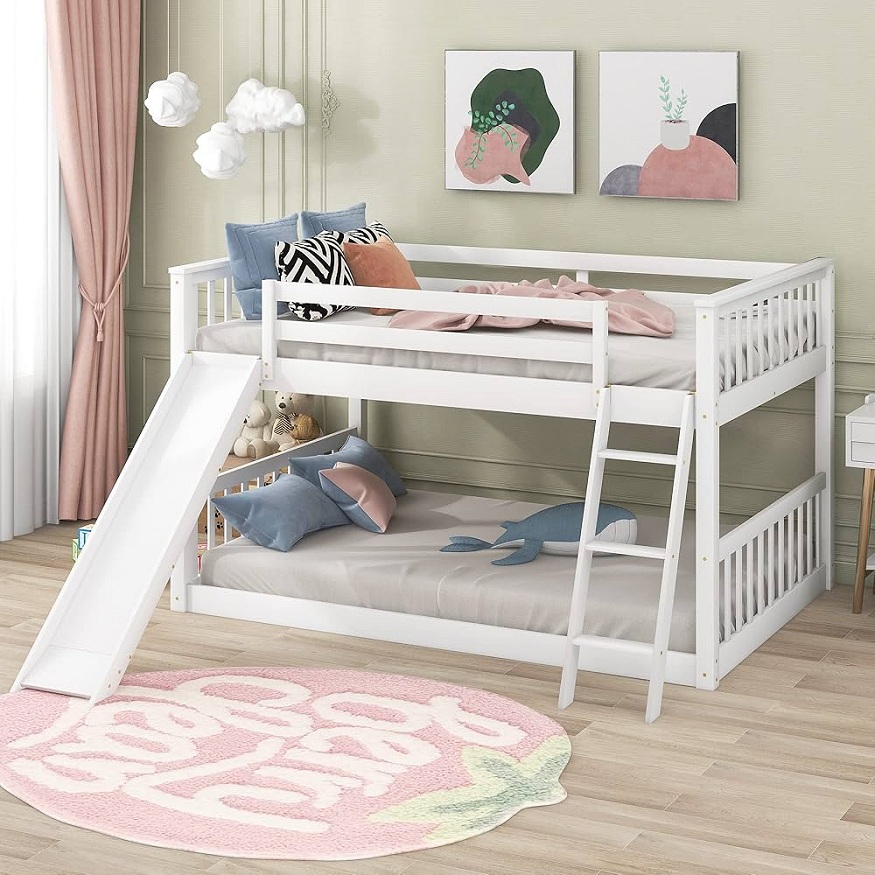
A room that was functioning well at four starts to become not working at all at eleven. The bed you thought was huge is now barely big enough for the kid. Toy storage is redundant. There’s no space for homework, no space for a friend to stay, and no space that’s their own. The room hasn’t got smaller – the things in it have just grown out of the space. The good news is you don’t need a bigger room. You just need a smarter one.
Start with zones, not aesthetics
Before you slap on a coat of paint or buy a stick of furniture, have a moment’s thought about what this room has to achieve. A teenager’s bedroom has to comfortable enough for them to sleep in. It has to have the amenities available for them to study in peace and it has to be a space to decompress.
When any of those three functions is happening in too close proximity to the others, it doesn’t really work. The Zoning approach is to assume that each of these functions is a separate room in a mini-bedroom. The bed is the bed. The desk is the study. The space where they watch something or hang out should be visually and almost physically set apart as another function. You don’t need walls for this. A rug can define a zone. The direction a piece of furniture faces can define a zone. Lighting can define a zone.
The vertical space most bedrooms waste
Traditional bed frames occupy a large space and don’t provide anything useful underneath. In a room where each square meter is important, this represents a significant loss.
Read More : The Three Signs Your Deck Needs Professional Help (Not Just a Quick Clean)
High Sleeper Bunk Beds are intended for dealing with this issue, in fact, many include a desk, shelves, and even cable organization. So, a teen can have their desk and a dedicated game area without the room feeling overwhelmed. In a regular room of 10 to 12 square meters, this is usually the most useful modification you can make.
By raising the bed, the entire geometry of the room changes. When the mattress is two meters from the ground, the area below becomes a functional space. That space that was previously lost with a simple frame, is now free to use as a desk, a game area, a small sofa, or any combination of these.
The second advantage is sleep health. Teens need to sleep between 8 and 10 hours per night but one of the main reasons they don’t is because screens and activities are easily accessed from the bed. Raising the mattress separates the sleeping area from everything else.
Furniture that doesn’t need replacing in three years
Toddler furniture is basically disposable. Teen furniture, used properly, should last at least a decade. It’s a completely different purchase.
In that vein: adjustable components. Desks that can be adjusted for height, shelving that can be reconfigured, proper lumbar support in chairs. Modular furniture costs more up front but doesn’t suddenly transform into useless crap the day your kid hits a growth spurt or takes up a new hobby.
Try not to buy around a trend or specific aesthetic. The perfect gaming setup at thirteen is moot at 16. Buy the good structural pieces – the bed, the desk, the storage – and allow the personality of the room to come through in the smaller, cheaper and more easily changed items.
Lighting does more work than most people give it credit for
Many children’s bedrooms just have a single overhead light. That’s all well and good when the room is essentially a playroom, but less so when it also has to function as an office, a retreat, and a bedroom.
A layered lighting approach costs a lot less than new furniture and has more impact on how the room functions according to its multiple roles during the day. Task lighting so they can actually see what they are doing at the desk – a proper adjustable lamp, not a cute one with a low-wattage bulb – helps reduce eye strain. Ambient LED strips behind the bed frame or under the shelving give enough light in the evening to read but not so much that they’ll be tweeting until 2 am.
This is partly a utilitarian decision and partly a means of giving a teenager something they can control in your home. But letting them choose the color the LED lights, the lamp, the tone of the reading light – these are very-low stakes things, which matter a lot to someone of that age.
Bring them into the process
The most significant error one can make when redesigning a teen room is approaching it as a parent’s project. If the teen doesn’t sense the room as being theirs, they’ll either abandon it or subconsciously reverse every modification you’ve approved.
Read More : Creating Comfortable Outdoor Spaces on Any Budget
Let them participate in selecting the colors, making layout decisions, and determining the purpose of each space. You establish the budget and ground rules. They comply with these. The outcome is a room they’ll comfortably hang out in – desk and all.
A room that suits a seventeen-year-old doesn’t demand more room. It necessitates that the existing room be properly utilized.




Leave a Reply
You must be logged in to post a comment.