
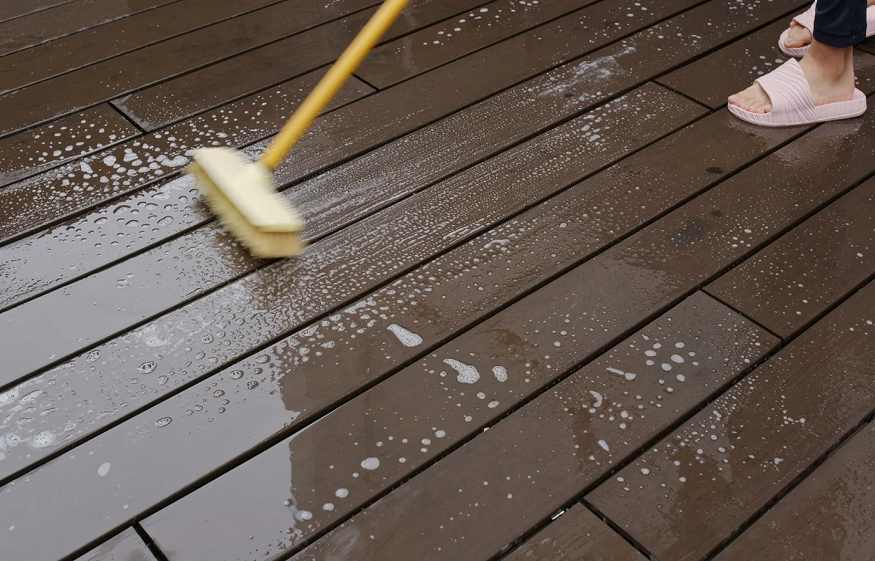
Most homeowners can handle basic deck maintenance. A sweep, a wash with the pressure cleaner, maybe some spot treatment for mould. These regular tasks keep a deck looking decent and prevent small problems from taking hold. But there’s a point where basic maintenance stops being enough, where the damage goes deeper than surface grime and weekend DIY can’t fix what’s actually wrong.
The tricky part is knowing when that line gets crossed. Wait too long and a salvageable deck becomes a replacement job. Call professionals too early and money gets spent unnecessarily. Understanding the warning signs helps homeowners make the right call at the right time.
Sign One: The Timber Surface Has Gone Fuzzy and Grey
Surface weathering happens to every deck eventually. UV exposure breaks down the lignin in timber, which is what gives wood its colour and some of its structural integrity. The surface turns grey, then starts developing that rough, fuzzy texture as the wood fibres separate and lift.
A bit of greying doesn’t mean disaster. Early stage weathering responds well to a thorough clean and fresh sealer application. But when the fuzziness extends deep into the timber, when running a hand across the boards feels like petting a cactus, the damage has progressed beyond simple fixes.
Read More:Creating Comfortable Outdoor Spaces on Any Budget
Here’s what’s actually happening: the protective barrier that should be keeping moisture out has failed completely. Rain soaks into the bare timber, the sun bakes it out again, and this cycle degrades the wood structure with every repetition. The timber expands when wet and contracts when dry, creating stress that manifests as checking, splitting, and that characteristic fuzzy texture.
Professional deck restoration services handle this kind of damage properly. Companies such as Deck Seal use methods that remove the degraded surface layer while preserving the sound timber underneath, then apply protection systems that actually penetrate and bond with the wood. The difference between this approach and a DIY sand and seal shows up in how long the results last.
Trying to seal over heavily weathered timber without proper preparation just traps moisture and accelerates rot. The sealer sits on top of damaged fibres rather than bonding with solid wood. Within months, it’s peeling and flaking, leaving the deck worse off than before treatment.
The other issue with advanced weathering is consistency. Some boards weather faster than others based on exposure, grain patterns, and timber quality. Getting an even finish across the entire deck requires experience with different timber conditions and how they respond to treatment. Professionals assess each section and adjust their approach accordingly.
Sign Two: Water Soaks Straight In Instead of Beading
This test takes about five seconds. Pour some water on the deck surface and watch what happens. If the water beads up and sits there, the protective coating is still working. If it soaks straight into the timber within moments, the deck has no meaningful protection left.
Bare timber acts like a sponge. Water penetrates deep into the grain, carrying dissolved minerals, tannins, and contaminants with it. When the surface dries, these substances concentrate in the timber, causing discolouration, staining, and chemical changes that weaken the wood structure.
The moisture cycling creates perfect conditions for fungal growth and decay. Wet periods allow mould and mildew to establish. Dry periods stress the timber as it shrinks and cracks. This constant movement works fixings loose, opens gaps between boards, and creates the splintering that makes decks uncomfortable to walk on barefoot.
Once timber reaches this stage, surface cleaning and a coat of sealer won’t restore proper protection. The wood needs preparation that removes contaminated surface layers and opens the grain to accept new protection products. This requires specific equipment, the right abrasive grades, and knowledge of how different timber species respond to treatment.
Professional restoration includes steps that most DIY approaches skip. Timber might need brightening agents to remove tannin stains and restore natural colour. It might need fungicide treatment if mould has penetrated below the surface. The moisture content needs checking to ensure the timber is dry enough for sealer application, otherwise the product fails regardless of how well it’s applied.
The products themselves make a difference too. Consumer-grade deck sealers from hardware stores work fine on lightly weathered timber that’s been properly prepared. They’re not formulated for seriously degraded decks or challenging conditions. Commercial-grade products offer better penetration, UV resistance, and longevity, but they also require specific application techniques to perform as designed.
Sign Three: Structural Movement and Loose Fixings
Walk across the deck and pay attention to how it feels. Does it flex more than it should? Do boards move under foot? Can you see gaps opening between boards and joists? These signs indicate problems that go beyond the surface.
Timber structures are designed with some flexibility, but excessive movement suggests fixings have worked loose or structural members have degraded. This happens when moisture penetrates connection points and causes corrosion of metal fixings or rot in the timber itself.
Deck screws and nails can corrode surprisingly fast when exposed to moisture and weather. Galvanised coatings break down, rust forms, and the fixing loses its grip. Meanwhile, the timber around the fixing point swells and shrinks with moisture changes, gradually enlarging the hole and reducing the connection strength.
Posts and bearers are particularly vulnerable because they stay damp longer than exposed decking boards. Ground contact points, anywhere water can pool, and shaded areas that don’t dry properly all become weak points in the structure. By the time movement becomes noticeable from above, significant decay might have occurred in the supporting framework.
This is where professional assessment becomes essential. Surface treatments won’t fix structural problems. The deck needs inspection from underneath to check joist condition, bearer integrity, and post stability. Loose or corroded fixings need replacing, damaged structural members might need reinforcing or replacing entirely, and the underlying cause of the moisture problem needs addressing.
Attempting structural repairs without proper knowledge creates safety risks. Load-bearing members need adequate support during repairs. Fixings must be sized and spaced correctly for the loads they carry. Posts need proper footings and bracing. Getting these details wrong can result in deck failure, which isn’t just expensive to fix after the fact, it’s dangerous.
When DIY Stops Being Enough
The pattern across all three signs is the same. Early intervention with basic maintenance keeps decks in good condition. Once damage progresses past a certain point, proper restoration requires equipment, products, and knowledge that most homeowners don’t have access to.
Trying to DIY advanced deck problems usually results in wasted money and time. The work doesn’t last, sometimes it makes things worse, and eventually professionals need to be called anyway to undo the DIY attempts before starting proper restoration.
The cost of professional work seems high until compared against the cost of deck replacement. A restoration project that brings a weathered deck back to excellent condition typically costs a fraction of replacement. It also preserves the existing structure, maintains the outdoor space layout, and delivers results within days rather than the weeks a full rebuild requires.
Read More:3 Reasons Homeowners Are Upgrading to Equinox Louvered Roof Systems
Deck condition doesn’t improve on its own. Weathering and damage are progressive processes that accelerate once they start. The deck that needs minor professional work this year will need major work next year if left untreated. Waiting doesn’t save money, it increases the eventual repair cost or brings forward the replacement timeline.
Recognising when a deck has crossed from basic maintenance territory into professional restoration needs helps homeowners make better decisions about their outdoor spaces. The three signs covered here indicate damage that responds best to expert treatment, where the investment in proper restoration delivers years of additional deck life and outdoor enjoyment.





Leave a Reply
You must be logged in to post a comment.