
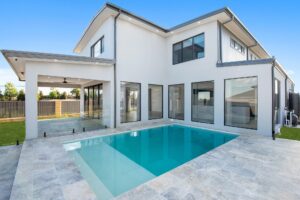
When it comes to creating a pool, there are certain design decisions made at the onset that will last for a lifetime. Unlike designing a room where paint colors and furniture placement can be easily changed after a year, the permanent nature of a pool emphasizes what was intended from the start. If people make the right decisions early on, they get decades of joy out of their investment, rather than a lingering feeling that something could’ve been done better.
The good news is that most choices are not as complicated as they seem at first. Once people understand what will make a difference they don’t have to worry about in the future, most designs come together fairly easily.
Size and shape that make the most sense
One of the initial thoughts behind designing a new pool is to make it as large as possible to fit into the space. While this may seem like a good idea, it’s not necessarily practical given how families actually use pools. A huge pool that takes up an entire backyard and doesn’t leave much room for deck chairs or landscaping gets less use than a moderately sized pool that allows for neighboring deck furniture and some landscaping. Adding a decent amount of space around it for deck chairs, planting, and lounging often brings more use than taking away all options in favor of square footage inside the pool.
Additionally, shape matters as well. Rectangles lend themselves to laps and games. Freeform types look more natural and aren’t always the best choice in oddly shaped lots. Depending on whether someone’s swimming as exercise, hosting parties or simply needs something aesthetically pleasing will determine which shape is best. Experienced pool builders sydney know better than to recommend an design that would only seem like it would fit better in a magazine.
Another consideration is depth. Besides adult pools which can be deep throughout, family pools must have ample shallow areas. What may seem like a good choice to start out with in determining depth eventually is the only option available for years.
Quality of materials
Concrete pools allow for tremendous flexibility in design and age better with proper care. It’s important to note that concrete can be formed into almost any shape and certain finishes – exposed aggregate, tiles, pebble finishes – create different shapes and feels.
The finish itself renders more than an aesthetic appeal to the immediate. Some surfaces feel better on your feet than others. Some attract more dirt than others; some require more maintenance and some stay cleaner pending water type. Over time, these factors become much more significant than the look of a finished product.
Furthermore, high-quality materials and construction techniques will make sure that designs do not crumble upon aging but instead improve after many years of reliable use. This is where experienced builders come into play; when things are looked at from behind-the-scenes, what’s not seen ends up making the biggest difference.
Add-ons that actually get used
Some choices made at the onset of construction lend themselves to further use down the line. Quality lighting options mean night swims are possible after dark or beautiful aesthetics come alive in the evenings. Quality heating mechanisms mean swimming in February is just as pleasant as July. Quality filtration and circulation reduce maintenance from an early age, meaning swimmable water is available quickly after construction.
However, there are those things which appeal at first but fail to get enough use when it comes to overall family dynamics. Attractive water features look gorgeous but require constant upkeep. Spas attached to the sides get more action for some families than others. Even entries that create beaches or natural boards require much more space than actual swim space lends itself to.
It’s imperative to know what can be afforded and what’s pretty but relatively useless so that what gets made supports how everyone in the family uses their space versus just what’s mesmerizing.
How a pool fits in with everything else
The idea of a pool does not exist in a vacuum; instead, it’s located in close proximity to the house, outdoor living spaces, and other backyard landscaping that can either enhance or detract from its appeal. Therefore where it’s located matters for sun, entry into other spaces and ease of getting from inside to out.
A pool that’s easy to access from main living spaces will be used more than one that’s shoved into a far corner. One that looks appealing from inside will appeal more to year-round enjoyment even if people don’t swim in it year-round.
Moreover, oftentimes what’s around a pool is just as important as the actual pool itself; deck space and patio space allow for furniture placement, shaded areas, space to move should create an outdoor living space as opposed to just access to swimming. This must all be taken into consideration at the same time as the pool size.
Future plans
Considering how people’s needs may change, future options can help create pools that work just as well for families in ten years as children are adults as they did when they were toddlers. A pool created with kids in mind should still work for teenagers bringing friends over or adults years later.
Initially added safety mechanisms allow access points to be created from the start as opposed to tacking them on later down the line. Steps and entries available for different ages help pools become more versatile which is especially important when features such as fencing become required by law and easier to install at first rather than added down the line.
In addition, equipment and tech are major aspects where future options should be included if possible. Running extra conduit for potential lighting or access to additions later costs less when first constructing than having to go back later. Giving space allows people greater flexibility without tearing things apart down the road.
Practicalities
How much maintenance each option requires should impact choices made initially but not for designs that work best for you. Creative angles with tighter corners are difficult to clean. Shallow depths attract leaves and debris. Some finishes need help more than others. These conditions should not eliminate potential choices they need transparency so people know what they’re signing up for.
Equipment also requires its own home; pumps, filters and cleaning supplies need an area that does not detract from visuals yet is accessible enough for repairs so placement should be discussed during construction so awkward situations don’t occur later.
Water elements, lighting and automatic systems require power; running electric during construction costs less than through trenches later. Builders who anticipate such infrastructure will have it all under one plan.
Decisions with long-term appeal
Ultimately those who design pools should pay attention to real-life factors rather than what’s trending at the moment. A pool that’s all aesthetics but feels wrong serves no purpose; one whose true sensibilities are honored will provide happiness for decades on end.
If this process sounds extensive it’s because it is! It should be! Those who care about their new element should think about daily life (seasons included), how it will realistically be used instead of boastfully designed to recognize what’s truly important versus what’s solely attractive at this moment in time.
Builders who interview potential clients and truly listen render better results than those who simply rush for decisions.
While budget does matter, money spent toward something that’s going to make daily life worthwhile down the line or construction created with appropriate engineering will outweigh anything cosmetic that’s easier to build in down the line compared to now.
Creating something worthwhile
Quality construction will create a dimension that’ll benefit property owners for decades on end; design decisions made at the start facilitate successful enjoyment down the line so taking time on the front end makes sense when deliberate options can help understand what’s valuable for your situation so time isn’t wasted once completed.
It’s not about making it perfect; it’s about creating a space that works so that over time it becomes a functional daily component of life instead of just something pleasing to look at from time to time.



Leave a Reply
You must be logged in to post a comment.